
Learning to Notice
Sometimes, looking isn’t seeing
Sometimes the world doesn't change. We simply slow down enough to see it.
I'd consider myself to be an observant person.
I can often tell you which birds are singing before I ever see them, mid-conversation while talking with someone outdoors. I frequently notice the hawk circling overhead, the birds suddenly go quiet, or the deer slipping quietly through the trees long before the conversation ends. Photography has trained me to pay attention to light, weather, and the little details that many people simply walk past.
Or at least I thought it had.
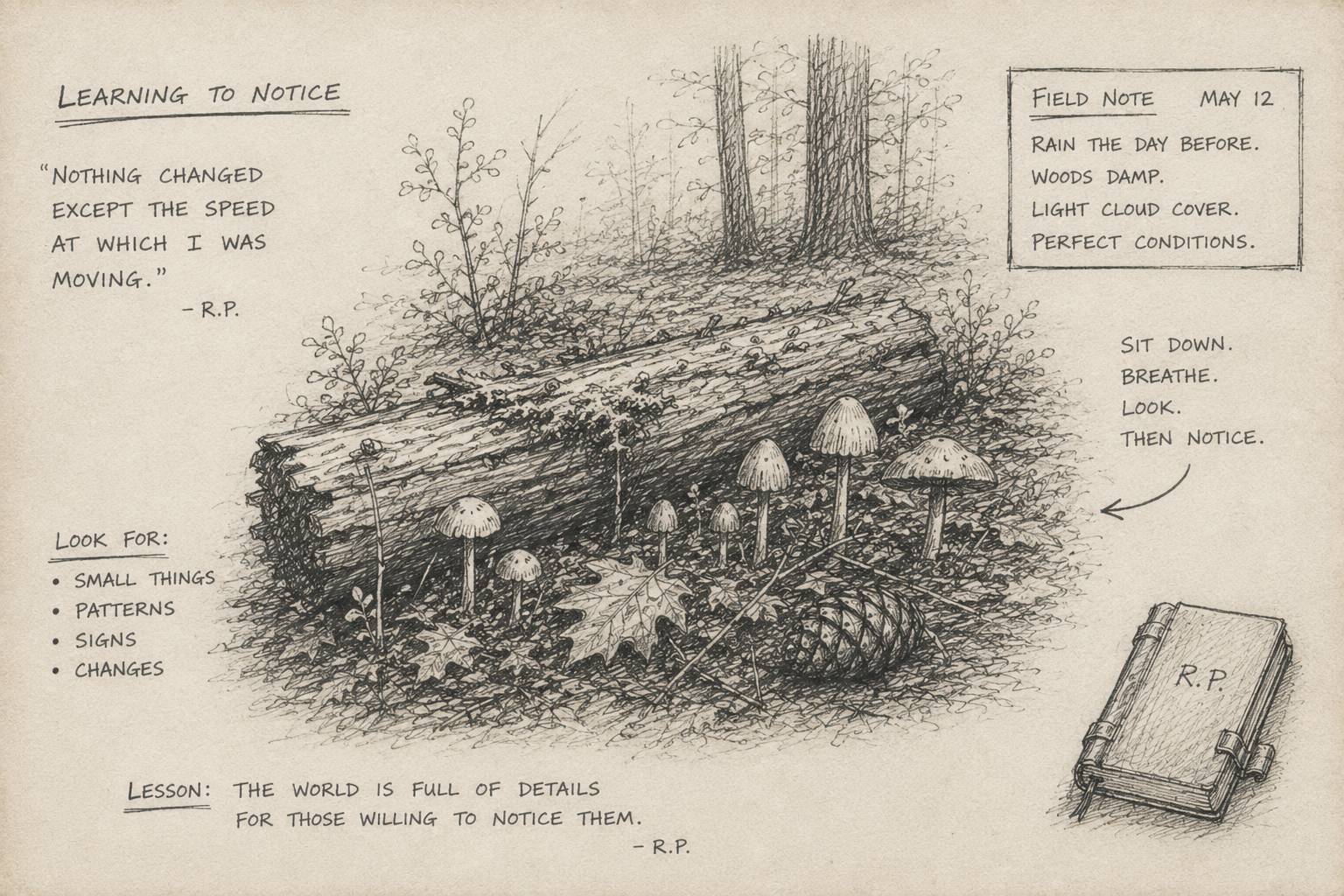
One morning after a steady rain the previous day, I headed into the woods with my macro lens, hoping to photograph mushrooms. The damp conditions were perfect, and I knew they had to be there. I walked slowly, scanning the forest floor, looking beneath fallen logs, around tree roots, and through patches of moss.
Nothing.
Well... almost nothing.
After a while, I decided to take a break. I found a log, sat down, pulled out a snack, and simply enjoyed the quiet.
That's when I saw one.
A tiny mushroom poking through the leaf litter only a few feet away.
Then another.
Then another.
Within minutes I realized they were everywhere.
The woods hadn't suddenly filled with mushrooms while I was eating my snack. They had been there the entire time. The only thing that had changed was me.
I had finally slowed down enough to notice.
That lesson has stayed with me ever since.
I've experienced it while photographing wildflowers. The first few minutes are often spent looking for "the flower." Before long, I begin noticing insects, tiny droplets of water, interesting leaves, patterns in the grass, and other flowers I would have completely overlooked had I stayed focused on only one objective.
I've seen it while hiking as well. There is a difference between traveling through a trail and experiencing one. When our only goal is reaching the next bend, we often miss the birds, the changing sounds, the shifting light, and the quiet signs that wildlife has recently passed by.
I've even noticed it in everyday life.
The best conversations often happen when we're fully present instead of thinking about what comes next. Acts of kindness are easy to miss when we're rushing. Gratitude rarely announces itself. Like those mushrooms, many of life's best moments sit quietly, waiting for someone willing to notice them.
That's one of the reasons I enjoy photography so much.
A camera has never made me more observant. It simply reminds me to become observant. It gives me a reason to slow down, to look a little longer, and to pay attention to things I might otherwise overlook.
Interestingly, this idea has found its way into the children's book series I'm writing, Journeys Of The Crew. The boys don't solve every problem because they're the strongest or the smartest. More often, they succeed because they begin paying closer attention to the world around them. Observation becomes a skill long before it becomes an advantage.
Maybe that's true for all of us.
The next time you find yourself outside, try an experiment.
Walk a little slower than feels natural.
Sit for a few minutes.
Listen more than you talk.
Look around without searching for anything in particular.
You may discover what I did that rainy morning in the woods.
Sometimes the world doesn't change.
Sometimes we simply learn to notice.
Continue the Journey
For more about why firsthand time outdoors matters to these stories, read Why I Keep Going Back to the Woods.
To see how different kinds of observation shape The Crew, read No One Sees the Whole Trail.