Before Memory Changes It
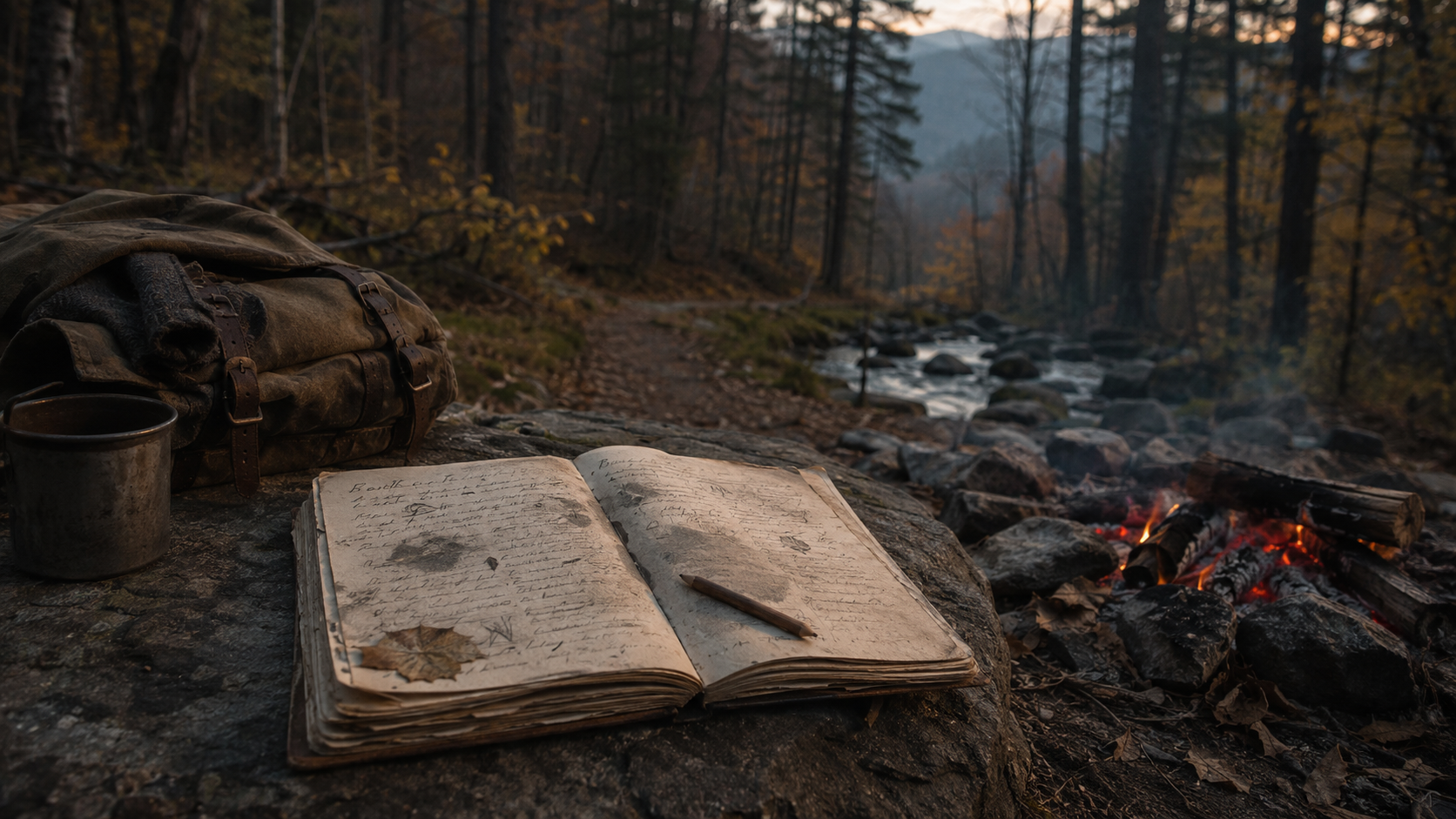
The page remembers the day before memory has a chance to change it.
A page from the field notes of Rusty Pickett
Used to figure a fellow only needed to write down the things he was liable to forget.
Dates. Distances. Which fork he took when the trail split.
Turns out those ain’t always the first things to go.
A man remembers reaching the ridge. Forgets how many times he nearly turned around getting there.
Remembers the fire once it was warm. Forgets the three damp matches it took to start it.
Remembers what he decided. Forgets what nearly convinced him otherwise.
Memory has a way of cleaning up after itself.
That is mostly why I write things down before it gets the chance.
I have trusted my memory plenty of times. It has done right by me on occasion. Other times, it has handed back a story neater than the one I lived.
That can be pleasant.
It ain’t always useful.
A hard climb gets shorter every time you remember it. Rain stops sooner. Packs grow lighter. The cold loses some of its teeth. Even a poor decision can start looking reasonable once you forget how close it came to becoming a dangerous one.
Give memory enough time and a fellow might begin to think he knew what he was doing all along.
The page knows better.
The page remembers that I crossed the creek too late in the day.
It remembers that I saw the clouds building and kept walking anyway.
It remembers the night I burned supper because I was watching a little owl watching me.
That last one may not be useful, but it deserves remembering all the same.
Most folks would probably write down the big things.
The mountain.
The storm.
The animal standing at the edge of camp.
I write those down too. Hard not to.
But the little things are usually the first to disappear, and I have come to believe they are the things that make one journey different from another.
The way the ground smelled after the rain.
A feather caught in the grass.
The sound of creek water moving beneath the ice when the creek itself looked still.
A set of tracks that followed the trail awhile, then turned into the brush without offering an explanation.
None of that may sound important while it is happening.
That is the trouble.
A fellow seldom knows which moments will matter while he is standing in them.
So I make notes.
Some are no more than a few words written while leaning against a tree. Some take up half a page after camp is settled and supper is gone. Others are scratched down in poor light and make considerably less sense the following morning.
I keep them anyway.
They tell me what the day was before I had time to improve it.
They remind me what worked. More important, they remind me what didn’t.
A mistake written down has a chance of becoming a lesson. A mistake left to memory sometimes turns into nothing more than a good story.
Good stories have their place.
So do dry socks.
There are pages in these journals I expect nobody else would care to read. Notes about boot grease. Firewood. Weather coming over a ridge. How far I walked before admitting I had taken the wrong trail.
That is all right.
I did not write them for anybody else.
I wrote them because a lesson earned ought to last longer than the bruise that taught it.
I wrote them because the woods are always saying something, and I am not always clever enough to understand it the first time.
Mostly, I wrote them because every journey becomes a story eventually.
And stories have a habit of rounding off the rough corners.
The page leaves them where they were.
I reckon that is what I want.
Not a record of how I wish the day had gone.
Not the version I might tell after enough time has passed.
Just the weather. The miles. The mistakes. The things I noticed.
The day as it was.
Before memory changes it.
—Rusty Pickett
Who Is Rusty Pickett?
Rusty Pickett is the outdoorsman, observer, and keeper of the field journals at the heart of Journeys Of The Crew. Meet Rusty Pickett and learn more about his place in the series.
Continue the Journey
If you have not met the man behind the initials, begin with Meet Rusty Pickett.
For more about the historical decisions behind Rusty’s voice and journals, read Rusty Pickett Never Told Me What Year It Was.