Why I Still Carry a Paper Map
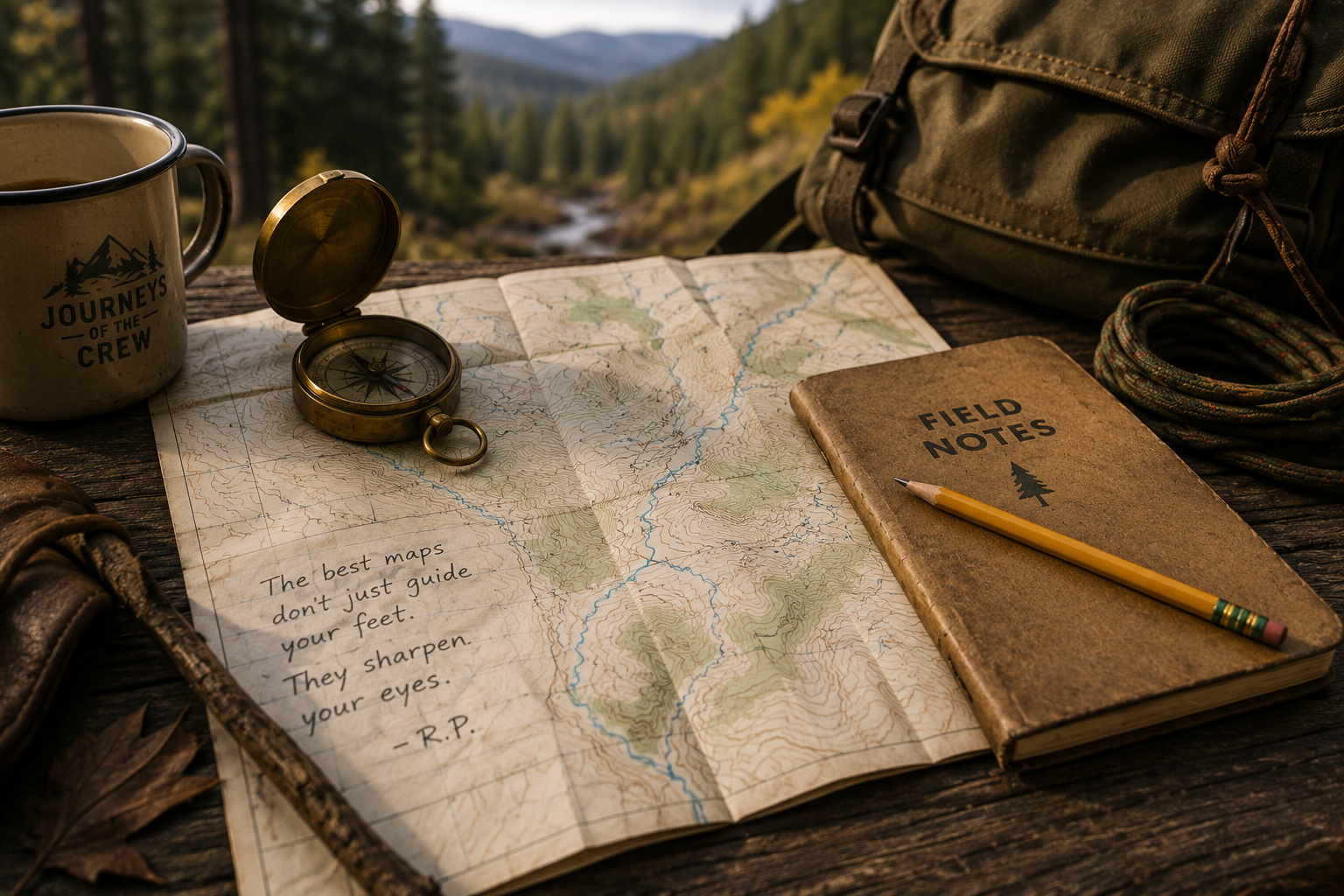
Some maps guide our footsteps. The best ones sharpen our eyes.
Upper Ridge
Late October
Field Journal No. 1
Didn't need the map today.
Least...
Didn't need to unfold it.
Spent most of the morning following the creek upstream.
Hard to get turned around when water's doing the leading.
By noon the valley pinched down into rock and spruce. Creek bent east. Trail kept north.
Didn't seem right.
Stopped on a little rise and looked around.
Mountain I'd been using all morning wasn't where I expected it.
Pulled the map out then.
Not because I didn't know where I was.
Because I wasn't sure why I thought I did.
Funny thing about paper maps.
They don't answer questions.
They ask 'em.
Where's north?
Which ridge is that?
What creek's making all that noise?
Where'd the trail disappear?
Map don't care if you're confident.
Only cares if you're paying attention.
Folded it back up after a minute.
Didn't need it anymore.
Needed to look around more than I needed to look down.
Found the old trail a few hundred yards later.
Never would've seen it if I'd stayed staring at the map.
A paper map's a curious thing.
Folks think it's there to tell 'em where to go.
Reckon it's better at reminding a fellow to notice where he already is.
Continue the Journey
For more about the two kinds of stories a map can preserve, read Every Map Tells Two Stories.
For a behind-the-scenes look at using maps to build a fictional place, read Sketching the Map.